Christmas Lights Garland: A Designer's Review
As a designer who spends more time staring at stitch maps than most people care to admit, I approach every new machine embroidery design with a mix of optimism and skepticism. When I first loaded the Christmas Lights Garland onto my screen, my immediate reaction was one of quiet appreciation. There is a specific mood this design captures—it feels less like a loud, flashing billboard and more like the warm, inviting glow of a cozy living room on a winter evening. For those of us running a craft business or selling handmade products on platforms like Etsy, finding assets that convey warmth without looking cheap is half the battle.
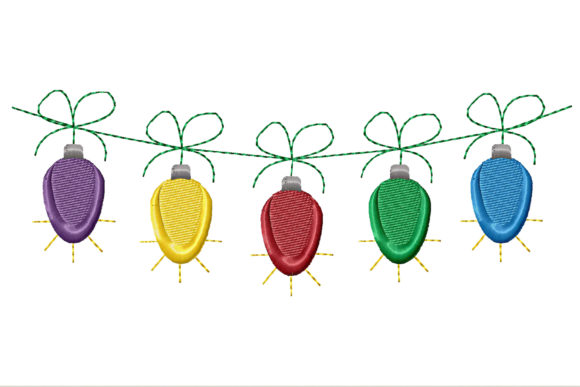
The visual personality of this embroidery file leans heavily into style over excessive detail. The layout mimics a string of lights draped casually, which gives it a natural flow rather than a rigid, geometric feel. This organic shape is crucial because it allows the design to adapt well to various surfaces. Whether you are working on a flat tote bag design or navigating the curve of a cap, the line work suggests movement. In my experience, designs that look too perfect often fail to connect emotionally with the buyer. This garland, however, has a charming imperfection that screams "handcrafted" even before the needle hits the fabric.
Putting the Design to the Test: Real-World Scenarios
To truly evaluate the potential of the Christmas Lights Garland, I imagined a specific project: a limited run of holiday tote bags for a local boutique. These weren't just any bags; they were heavy canvas totes intended for carrying gifts, meaning they needed to withstand weight and frequent handling. The design's placement on the lower third of the bag created a lovely border effect. Because the lights are stylized, they didn't get lost against the texture of the canvas. Instead, the fill stitch areas in the bulbs provided enough coverage to pop against the neutral background, while the connecting wire, likely a running stitch or thin satin column, kept the look delicate.
I also considered how this would translate to custom apparel. Picture a heather grey sweatshirt. Sweatshirt embroidery can be tricky because of the fleece backing and the stretch of the fabric. The garland format works beautifully here because it doesn't require a massive, solid block of stitching that might cause puckering. If you were to place this on the sleeve or across the chest, it adds a festive touch without overwhelming the garment. For baby embroidery projects, such as a holiday onesie or a blanket border, the scale seems appropriate, provided you resize it correctly within your software. The soft curves are safe and friendly for children's items, avoiding sharp angles that might look too aggressive.
For Etsy sellers and creative entrepreneurs, the versatility of this design extends to home decor. The product description mentions pillows, and I can confirm that this is a strong use case. A velvet pillow cover with this garland stitched in metallic or high-sheen threads would elevate a standard holiday decoration into a boutique-quality item. The contrast between the plush fabric and the defined stitches creates a tactile experience that customers love. Furthermore, for those creating printable mockups or digital previews, the distinct silhouette of the lights renders clearly even in small thumbnail images, which is vital for online conversion rates.
Navigating Fabric Textures and Technical Challenges
While the aesthetic appeal is high, a professional reviewer must address the technical realities. Not every fabric plays nice with every design. With the Christmas Lights Garland, you need to be mindful of stitch density. If the bulbs are densely filled, stitching them on a thin, stretchy fabric like a lightweight t-shirt could lead to distortion. In these cases, using a high-quality cutaway stabilizer is non-negotiable. You want the finished product to lay flat, not curl up around the edges of the lights.
Textured fabrics present another consideration. If you are embroidering on a waffle-weave kitchen towel or a rough linen apron, the finer details of the wire connecting the lights might get lost. The fabric texture can interfere with the clarity of thin running stitches. My advice is to test the design on a scrap piece of your intended material first. Check if the thread colors provide enough contrast. On dark fabrics, a standard red or green might vanish. You may need to opt for brighter variations or add a subtle underlay to make the lights glow effectively. Conversely, on very dark navy or black garments, using gold or silver thread for the bulbs can create a stunning, high-end look that justifies a higher price point for your small shop product.
Curved surfaces, like caps, require careful hooping. The garland's horizontal flow means it needs to be centered perfectly; otherwise, it will look like it's sliding off the hat. Ensure your hoop size accommodates the full width of the design without cramming it near the edge, which can cause hoop burns or skipped stitches.
Commercial Viability and Brand Consistency
From a business perspective, the Christmas Lights Garland offers significant value. It taps into the evergreen market of holiday embroidery without being overly specific to a single year or trend. This longevity is key for design assets meant for commercial use. When a customer sees a cohesive collection of items featuring this design—perhaps matching towels, aprons, and tote bags—it builds trust in your brand. It shows attention to detail and a curated eye.
The design also enhances the perceived value of the finished product. A plain pillow becomes a seasonal statement piece; a simple tote becomes a gift-ready accessory. This "giftability" factor is what drives sales in December. However, before listing items for sale, you must verify the licensing terms associated with the digital embroidery file. Some designers allow unlimited commercial use for physical goods but restrict the resale of the file itself. Always read the fine print to ensure you are compliant, especially if you plan to offer personalized versions where you might be modifying the original file.
Final Thoughts for the Practical Maker
In summary, the Christmas Lights Garland is a robust addition to any designer's library. It strikes a balance between decorative flair and practical application. It is not an applique design, so you won't have to deal with cutting and positioning fabric pieces, which speeds up production time—a critical factor during the busy holiday season. The reliance on satin stitch and fill techniques ensures durability, making it suitable for items that will be washed and used repeatedly.
My recommendation is to embrace experimentation. Try it on different materials, play with thread weights, and see how it looks in both monochrome and full color. Whether you are creating a personalized gift for a family member or stocking inventory for a craft fair, this design has the flexibility to support your vision. Just remember to respect the limitations of your machine and fabric, test your tension settings, and let the natural charm of the garland do the heavy lifting. When executed with care, this design doesn't just decorate an item; it brings a sense of festive warmth that resonates with anyone who sees it.